
Bete Medhane Alem – The Largest Rock-Hewn Church of Lalibela
Bete Medhane Alem—which translates to “House of the Savior of the World”—is the largest of all the Monolithic rock-hewn churches in Lalibela. It measures an impressive 33.7 meters in length, 23.7 meters in width, and 11.5 meters in height, covering a total area of nearly 800 square meters.
The church is so immense that its structure requires 36 pillars inside to support the roof, while another 36 pillars surround the exterior. Many architectural historians believe the original Church of Our Lady Mary of Zion in Axum served as the design model for Bete Medhane Alem, which is evident in the Axumite framework style of the doorways.
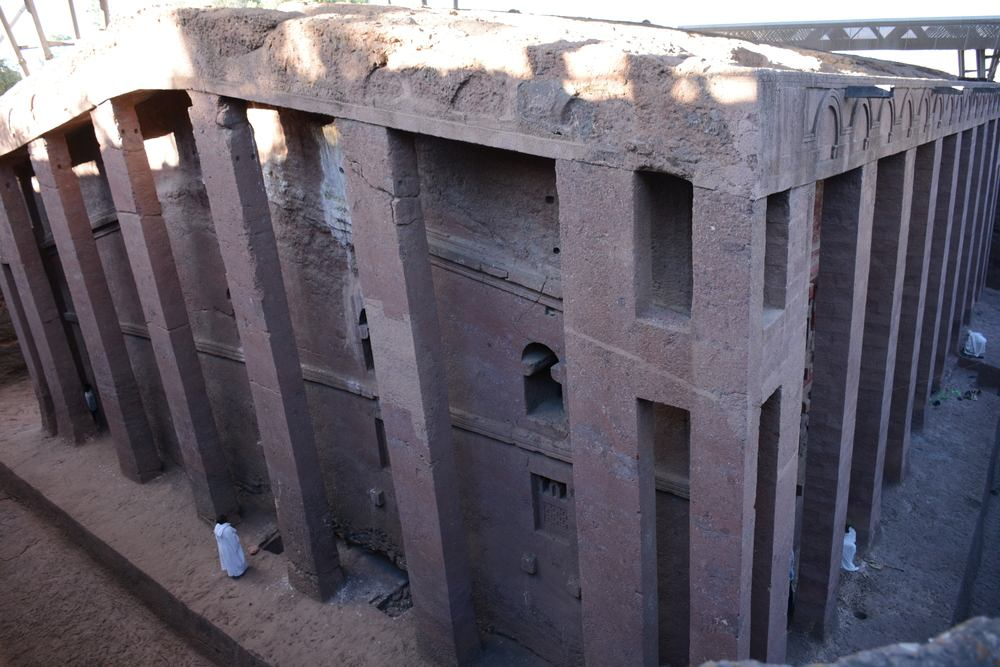
The interior is vast, spacious, and relatively plain, creating a grand, cathedral-like atmosphere. The external pillars and rectangular shape also lead many visitors to compare its appearance to an ancient Greek temple. Inside, in a corner on the left side, three empty graves are carved directly into the floor, serving as symbolic tombs for the biblical patriarchs Abraham, Isaac, and Jacob.
Bete Medhane Alem holds immense spiritual significance. Every Sunday, and specifically on the 5th day of every month in the Ethiopian calendar, crowds of worshippers gather here. They come seeking blessings or healing from illnesses through the famous Lalibela Cross. This sacred artifact was the personal possession of Emperor Lalibela himself and is crafted from 7 kilograms of solid gold.
Where is Bete Medhane Alem?
The church is the first structure located in the northern cluster of the Lalibela churches. After entering the main gates, walking across, and passing the courtyard, you are immediately confronted by a glowing, deep pink structure chiseled entirely from the surrounding rock. The surrounding rock features rock-cut cells historically used by hermits, as well as a tunnel that connects directly to a network of trenches, providing a proper pathway to the neighboring church of Bete Maryam.
Best Time to Visit
To experience the church at its most vibrant, visit on a Sunday morning or on the 5th day of the month to witness the gathering of local worshippers and the blessing ceremony of the Lalibela Cross. Early mornings generally offer cooler temperatures and softer light for viewing the deep pink rock.
Dress Code & Entry Tips
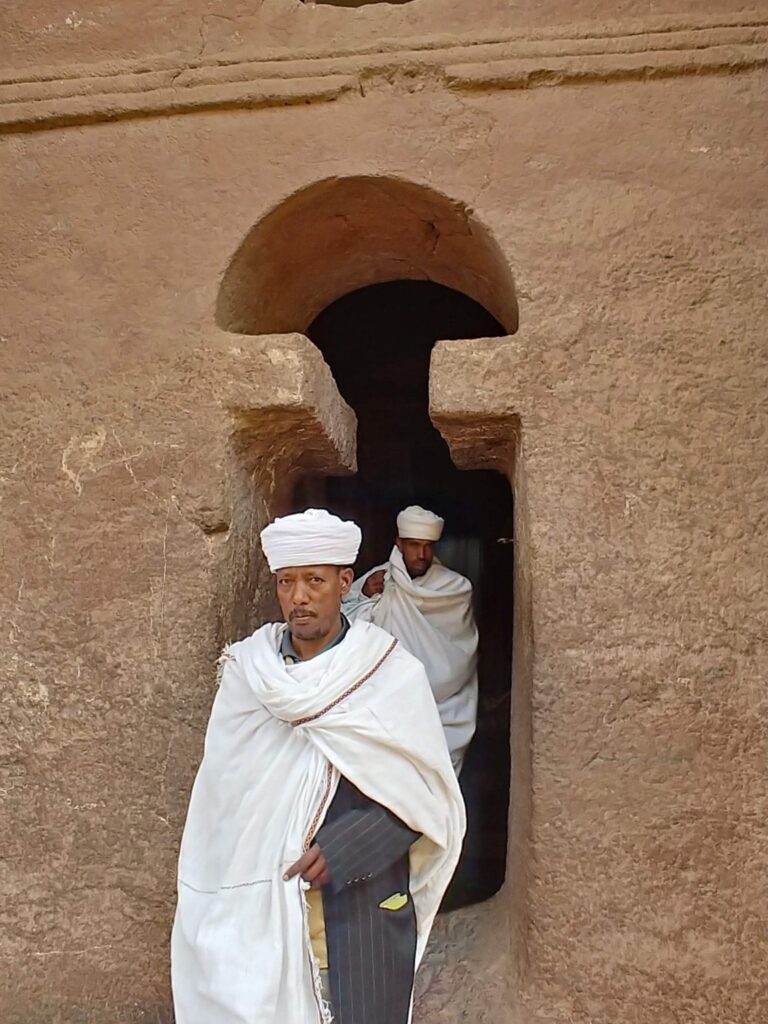
- Dress Appropriately: As an active place of worship, visitors should wear modest clothing. Long pants or skirts and covered shoulders are required. It is traditional and respectful to wear white clothing or a traditional shawl when entering.
- Footwear: You must remove your shoes before entering the church interior. Socks are permitted and recommended.
- Respect the Services: If you visit during service times, maintain silence, avoid using flash photography, and be mindful of worshippers praying near the symbolic tombs or waiting for blessings.
Pingback: Churches of Lalibela - My Ethiopia Tours